
[A PROSE] Hold on For as Long as You Can...
- Caroline Giudice
- Nov 18, 2024
- 7 min read
Updated: Apr 25, 2025

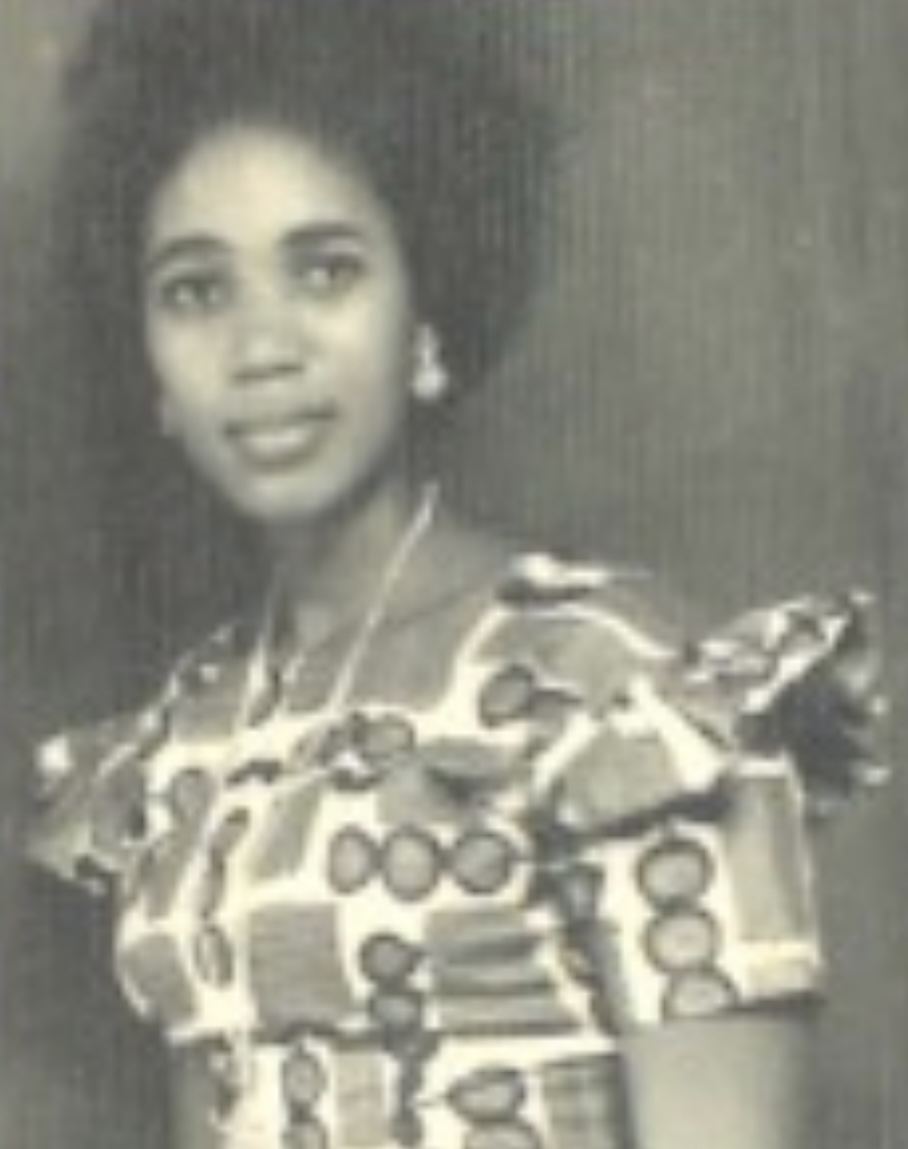
This year, it seems I lived a thousand years. It's been seven months since I lost my mother. Each day, I live in disbelief, especially when I pause to reflect on it. Yet, deep down, my subconscious knows the truth because we haven’t spoken in all these months. And still, I find myself wondering—how can she be gone? Doesn’t it feel like she’s just travelled somewhere far away, as though she’ll call one of these days to say she’s coming home?
Have you ever caught yourself waiting for someone you know won’t return? I know damn well she won’t, but the thought lingers, stubborn and persistent, like the ticking of a clock. When she first passed, I clung to my belief in an afterlife, hoping she’d send me a sign, as she had once promised. But when I went to the mortuary to see her body, that belief vanished into thin air—just like my mother’s spirit.
Seeing her lifeless form, so vacant and unfamiliar, was a brutal reality. Her lips, once full, were just a thin line. Her bold nose had faded into faint contours, drained of expression. She didn’t look like she was sleeping; she looked like someone else. I stared at the body that had recently belonged to my mother, thinking, 'No, this isn’t her.' I said it aloud, my voice trembling, ‘This isn’t her.’ I looked around the room for collaboration, my eyes searching desperately for someone to confirm my disbelief. My brother stood quiet, his face a mask of weariness, while my sister-in-law clutched his arm, avoiding my gaze. My neighbour, who had been with her when she passed, lowered her head, her silence almost unbearable. Beside me, my husband stood frozen, his face pale at seeing her for the first time, as I was. The room offered nothing but silence, as though words had also evaporated into the void. 'Let’s look at her legs,' my neighbour finally suggested, her voice gentle but firm. I nodded numbly, but when I saw her legs, my knees buckled. I trembled as the words spilt out, over and over, 'That’s my mother! That’s my mother! Oh my God, it’s her.' Moments later, I was escorted out, broken and paralysed. Unable to process what I had just seen, I dragged with me a sense of finality I wasn’t ready for. How could anyone be? Don't they say, 'Till death do us part?' Haven't we already drawn a line that cannot be crossed?' Death severs every connection, leaving no forwarding address.
My mother was 79, young enough to have stayed for another decade, but here we are. I once envied children and teenagers, believing they had time on their side. But that’s an illusion—none of us know when our turn will come. Life is a queue we’re all forced to stand in, waiting for our number to be called. Some try to jump ahead, but no one escapes; we all hold a ticket we never asked for or wanted. It’s like standing in line at the post office: we’re given a number without explanation, forced to wait our turn, even as others mysteriously disappear ahead of us. If there is another life, I’d like to commend the admin team for their seamless operation. Smoothly, they ensure our loved ones cross over without leaving a trace—no crumbs, no signs, no path to follow. It’s as if they’ve perfected the ultimate transition, cloaking it in a mystery so profound that it feels intentional. Yet, their system confounds me. People do sometimes jump ahead in the line—through suicide, murder, or the cruel lottery of accidents—and the queue shuffles continually forward without rhyme or reason. Perhaps that’s the point: a queue with no fairness, no guarantees, and no knowing when your turn will come. We interpret it as randomness because that’s all we can do; it’s difficult to assign meaning to something that refuses to explain itself. Maybe that’s the admin team’s design: to let us wrestle with the absurdity of it all, to make peace with the unknowable, or perhaps to never find peace with it at all.
My mother’s number had been called, and abruptly she left everything behind: her family, her cherished home and her beautiful life. I wonder if she even realised what was happening. Did she think it was like standing in a queue at the post office? Did she experience a moment of relief when her turn finally came? Maybe she felt a sense of order, of fairness, that her number being called was simply the effect of life moving forward. Or perhaps she didn’t know it was her ending—her surrender, her departure, her long voyage. Having signed without reading the small print, she simply stepped forward unknowingly. Like a toddler playing by an open window, unaware of the danger, climbing higher and higher until it was too late to turn back—she must have realised only when the fall had already begun.
And so, she left us. I’ve inherited her house, but it feels empty without her. The house that she had adored now sits as a quiet monument to her absence. Since her passing, I’ve changed. Grudges feel pointless, and I spend money more freely. But joy also feels hollow without her—I can’t call her to share it. Nothing feels permanent anymore, not even my memories. Everything is fleeting, like a breeze.
Each death I hear of feels like a crack forming in glass, spreading slowly, until the pieces no longer feel whole. Every loss whispers the same truth: We’re all fragile. A friend of ours passed away recently, just two weeks after my husband and I had last seen him. He was middle-aged, vibrant, and someone we both cherished. His death, a sudden heart attack in his home, still feels surreal. Just weeks before his passing, he had commented on my mother’s death, saying it was the best way to go—quick and unexpected. ‘That’s how I’d like to go,’ he said. And he did. But the news of his passing felt like another crack spreading through my already broken heart. Yet I couldn’t even cry for him; my mother’s death had drained all my tears. It’s strange, isn’t it, how the things we say casually, even wistfully, can come back to haunt us. Be careful what you wish for; sometimes it comes true in ways you could never anticipate. This understanding drives me forward, even as it weighs me down.
This Christmas, I’ll spend the holiday in her house—now my house—her pride and joy. While others decorate their homes, I’ll be emptying her bedroom—the room where my brother found her on the morning of my birthday. She later passed in the early hours. I still lack the courage to ask my neighbour what really happened that night, and maybe it’s better that way. Her number was called; that’s all there is to it. Part of me fears hearing the details of her last moments, but more than that, I feel it would be an invasion of her privacy. Those final hours were hers alone, a moment between her and the universe. To ask would feel like prying into something sacred, and I respect her too much for that. But I can already feel the anger rising, the loneliness creeping in, and the frustration boiling beneath it all. How can I celebrate when her absence is so loud it drowns everything else out? The thought of filling this house with festive cheer feels unbearable, almost offensive, as though mocking her memory. So instead, I’ll sit in the quiet, surrounded by the echoes of her life, trying to make sense of the emptiness she left behind.
When the call came, I was in Italy. The words burned through the phone like fire. I dropped it, running to my husband like a child seeking refuge. My brother, who had delivered the news, has become a different person in my eyes—a warrior messenger.
‘We’re home,’ he said.
‘Home? Already?’ I asked.
‘No, God took her!’
Ah, that home, I now realise. These days, I look at my life like an impossibly long to-do list, and feel unsure of how to move forward. Without her, I feel like an invalid, relearning how to walk and talk. Each step feels unsteady, each word uncertain, as though the foundation of who I was has crumbled. We carry on—because that’s what life demands—prisoners to its rules, bound to carry a cross of some kind. We are born without choice, we die without consent and, in between, we are trapped in a world that requires us to suffer. We must go to school, get an education, work to earn our keep, feed ourselves, find shelter, and survive. This is life—an endless cycle of demands that gives no reprieve. And yet, amidst all this, I find myself craving the things I can never experience again. Her laughter, her voice calling my name, the way she made the simplest things feel like magic. And, yes, even the times she made me furious—the arguments that left me fuming, her stubbornness that matched my own. Her absence looms, settling like a silent unwanted guest. I keep wondering whether it will get easier and whether there will ever come a day when I don’t count the time since she left, measuring it like a wound that refuses to heal. And yet, her memory lingers, uninvited but never unwelcome, like quiet static interference in my mind. It hums softly, reminding me of what I’ve lost and what I can never let go.
I bought a Cartier Trinity. It’s always on my finger now. Two white gold bands catch the light when I move, but it’s the black ceramic band that my thumb lingers on, tracing its smooth curve. Sometimes, I spin the intertwined bands slowly, feeling their quiet weight pressing against my skin, as though they hold something unspoken. The engraving inside—hidden, almost sacred—rests against my skin, a small secret that I never need to see to remember. My hand often drifts to it without thought, my fingers turning it over, again and again, as though trying to unlock something buried deep. Her laughter echoes faintly in the movement. A flash of her stubborn smile surfaces and then fades.
Sometimes, the way she made me so angry flits past, almost bringing a smile before dissolving into the ache of knowing she’s gone. The circle feels endless, like time itself, but with every turn, I’m reminded of how it can fray at the edges. I never speak of it. I don’t have to. The quiet rhythm of its presence says everything.
#
This piece is a tribute
to my mother and the bond I share with my brother.
It’s a reflection of love, loss, and the enduring strength of family.

![[A POEM PROSE] The Day She Took the Light with Her... September 1944 - May 2024](https://static.wixstatic.com/media/85f28e_91324407de9047a291ea33ae86e7b028~mv2.png/v1/fill/w_980,h_1470,al_c,q_90,usm_0.66_1.00_0.01,enc_avif,quality_auto/85f28e_91324407de9047a291ea33ae86e7b028~mv2.png)

Comments